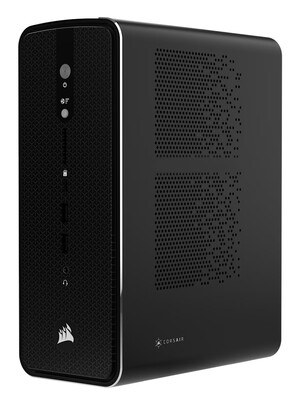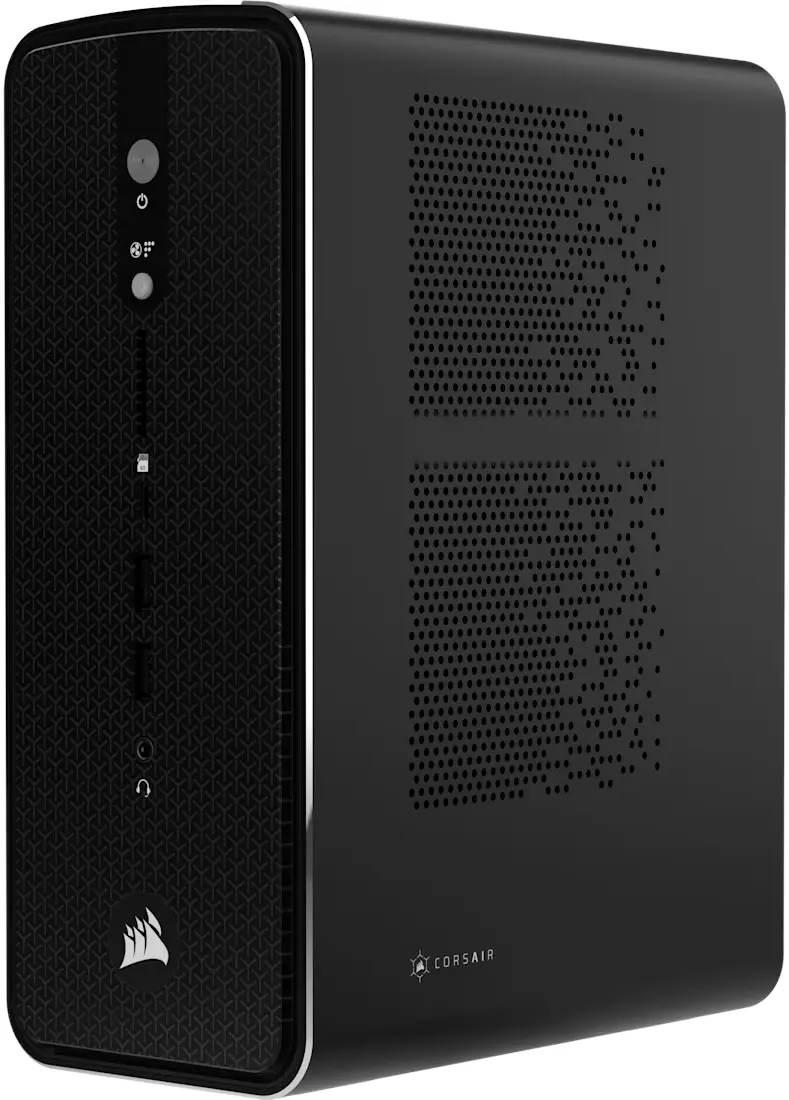
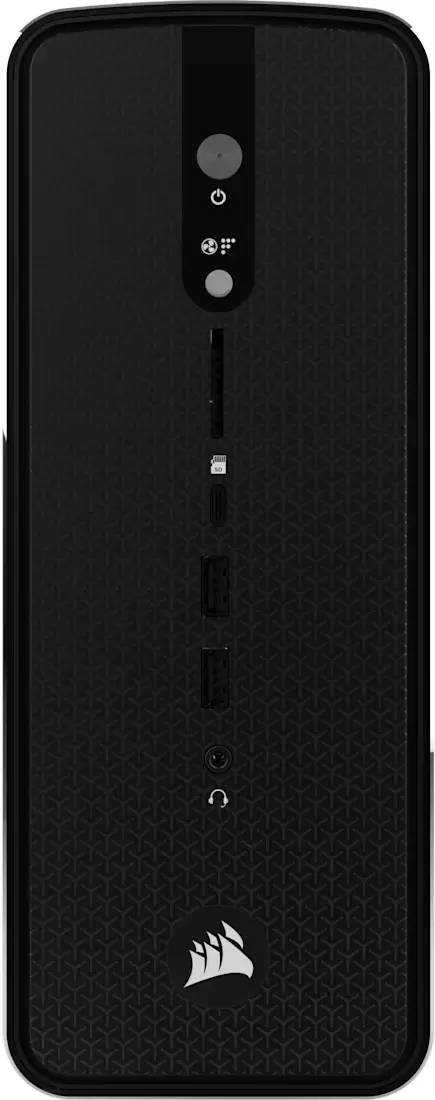
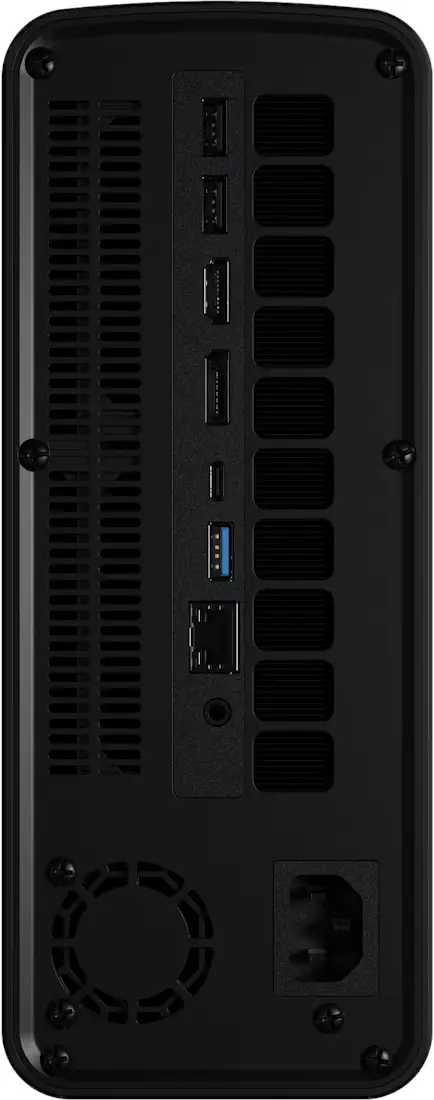
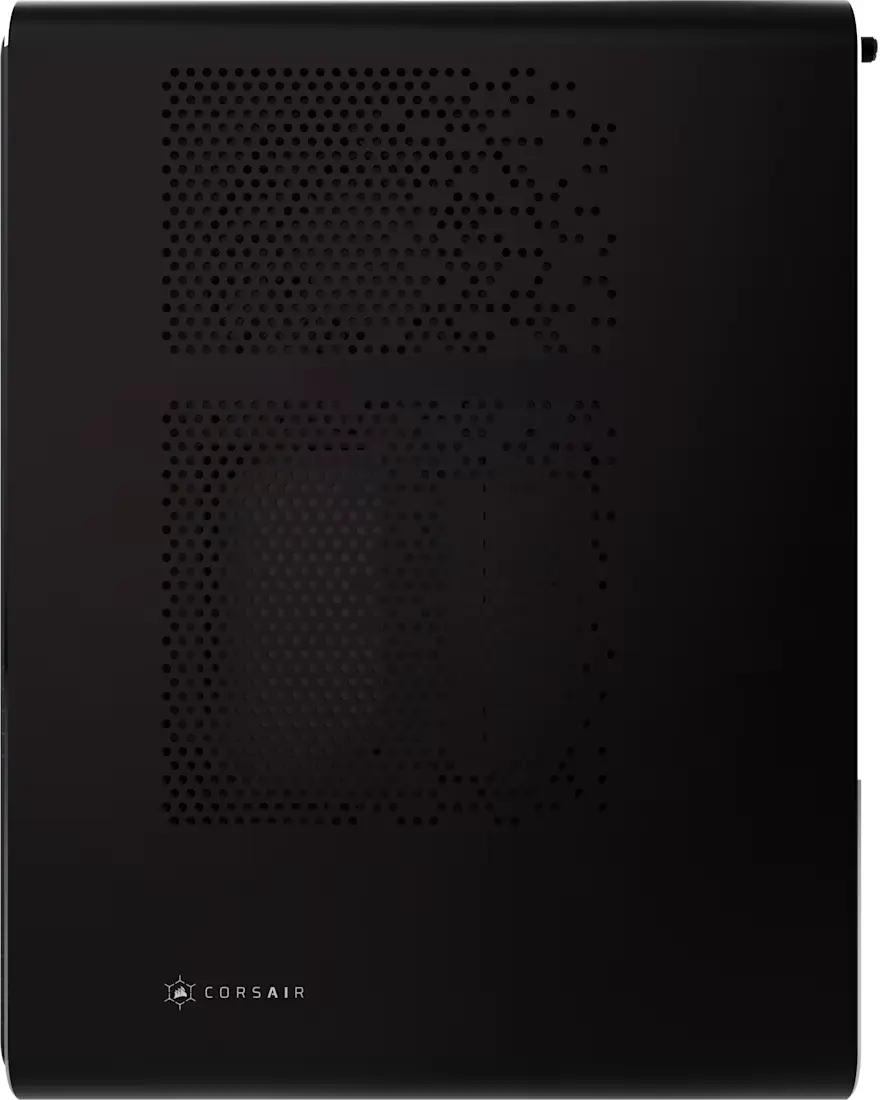
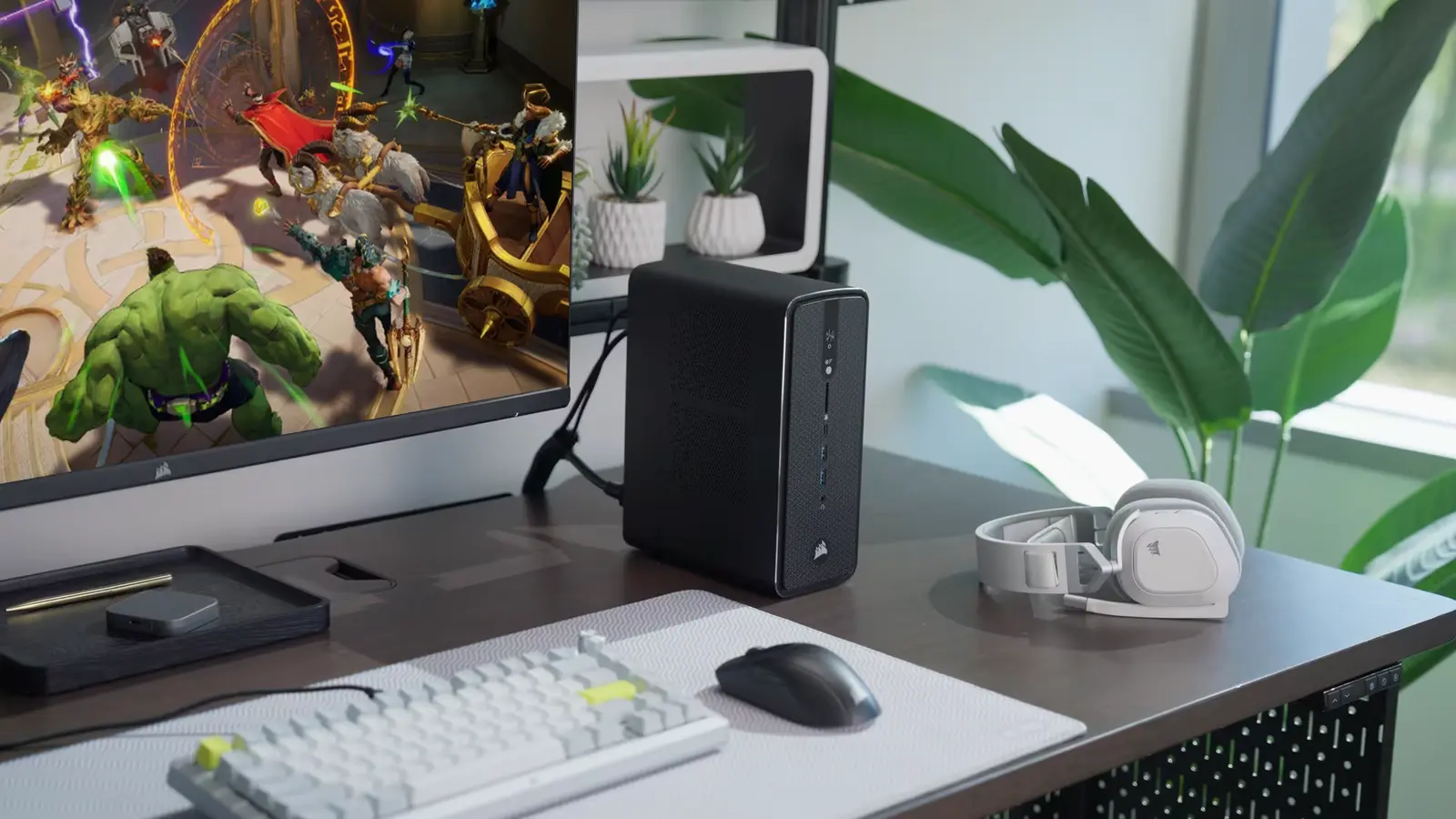
Corsair AI Workstation 300
Use this to tell your different configurations apart in your cart — handy if you order the same product with different options.
Full Specifications
Compute & Memory
Chip
AMD Ryzen AI Max+ 395
CPU
16-core / 32-thread Zen 5
GPU
AMD Radeon 8060S (RDNA 3.5, 40 CUs)
NPU
XDNA 2, up to 50 TOPS
Unified Memory
128 GB LPDDR5x-8000 (up to 96 GB GPU-addressable)
Storage & Physical
Storage
2 x 2 TB PCIe 4.0 NVMe SSD (4 TB total, dual-boot ready)
Dimensions
220 x 220 x 91 mm
Weight
3.2 kg
Connectivity & Networking
Ethernet
2.5 GbE
Wireless
Wi-Fi 6E, Bluetooth 5.2
Display Outputs
HDMI 2.1 (4K60), DisplayPort 1.4 (4K120 / 5K60)
Power & Thermal
Power Supply
300 W Flex ATX
Cooling
Dual-fan adaptive cooling with 3-mode hardware performance dial (Quiet / Balanced / Max)
Software & Security
Operating System
Windows 11 Home, dual-boot capable with Linux + ROCm
Security
TPM 2.0
The Corsair AI Workstation 300 builds on the AMD Ryzen AI Max+ 395 platform — a single chip combining CPU, GPU, and NPU around one shared 128 GB memory pool — and turns it into a compact, business-ready local AI server. Instead of routing document processing, chat assistants, or coding help through costly cloud APIs, an SMB can run substantial open-weight models entirely on-site, at a fixed hardware cost.
Hardware Specifications
At its core sits the AMD Ryzen AI Max+ 395: 16 Zen 5 CPU cores (32 threads) alongside an integrated XDNA 2 NPU rated at up to 50 TOPS, and an AMD Radeon 8060S GPU (RDNA 3.5, 40 compute units) for on-device generative workloads. All three engines draw from the same 128 GB LPDDR5x-8000 unified memory pool, soldered for consistent, factory-validated performance. Storage is handled by dual 2 TB PCIe 4.0 NVMe SSDs (4 TB total), and the entire system fits into a 4.4-liter chassis quiet enough for a shared office.
128 GB Unified Memory: Run 120B-Class Models Without Per-Token Billing
Because CPU, GPU, and NPU address the same memory pool, up to 96 GB can be assigned to the GPU for model weights and inference, while the remainder stays reserved for the operating system and background applications — adjustable in firmware without a reboot. This is enough headroom to host 100B+ parameter class open models — the segment that includes Meta Llama 4 Scout, OpenAI GPT-OSS, Qwen3.5 and Mistral Large — locally, at full precision, for as many employees and queries as the business needs.
For everyday interactive use — support chatbots, document Q&A, code assistance — mid-sized models run comfortably at conversational speed. The same 128 GB pool also accommodates a single 200B-class model for heavier reasoning tasks, run in batch or overnight rather than turn-by-turn, without ever leaving the building or incurring accumulating per-query charges.
Built for the Office
A 4.4-liter chassis, 300 W power draw, and 2.5 GbE plus Wi-Fi 6E connectivity mean the Corsair AI Workstation 300 slots into a normal office network and desk footprint rather than a server room. TPM 2.0 is included as standard, keeping locally processed business data — contracts, customer records, internal documents — encrypted and on-premises by default.
Summary
For SMBs evaluating the AMD Ryzen AI Max+ 395 category for local AI hosting, the Corsair AI Workstation 300 combines the platform's defining strength — a large, flexible unified memory pool — with a dedicated hardware performance dial and a ready-to-deploy software stack, at a competitive price.