GMKtec EVO-X3
Use this to tell your different configurations apart in your cart — handy if you order the same product with different options.
Full Specifications
Compute & Memory
Chip
AMD Ryzen AI Max+ PRO 495
CPU
16-core / 32-thread Zen 5
GPU
AMD Radeon 8060S (RDNA 3.5, 40 CUs)
NPU
XDNA 2, up to 50 TOPS
Unified Memory
192 GB LPDDR5x (up to 160 GB GPU-addressable)
Storage & Physical
Storage
2 × M.2 PCIe 4.0 NVMe SSD (4 TB included, expandable)
Dimensions
105 x 105 x 190 mm
Weight
2.3 kg
Connectivity & Networking
Ethernet
2.5 GbE
Wireless
Wi-Fi 7, Bluetooth 5.4
Expansion
OCuLink Gen4 ×4 (external GPU support), 2 × USB4
Display Outputs
HDMI 2.1, DisplayPort 2.1
Power & Thermal
Power Profiles
Silent (54 W), Balanced (85 W), Performance (up to 140 W)
Cooling
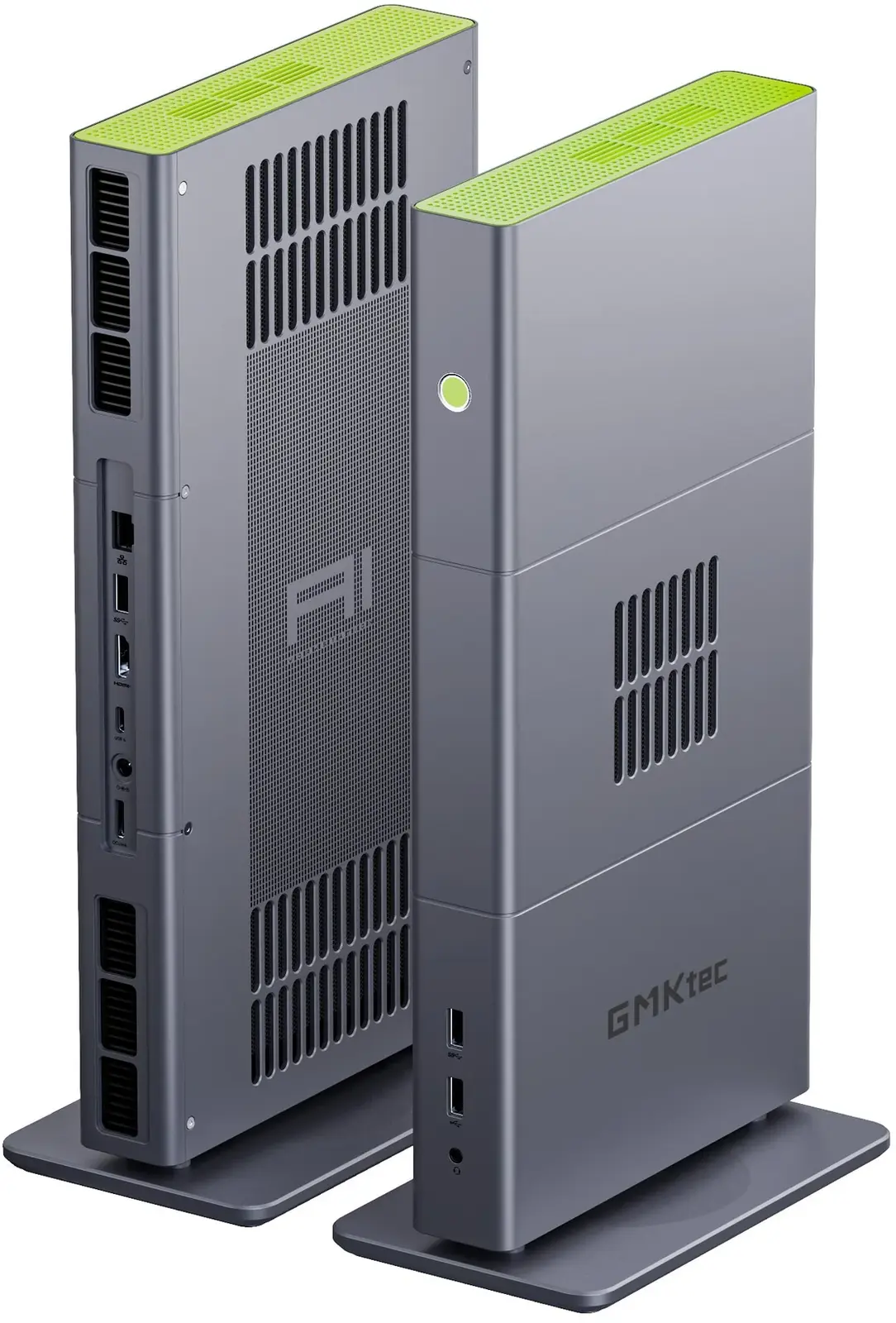
Triple-fan vertical-tower chassis, triple heat-pipe design
Software & Security
Operating System
Windows 11 Pro, Linux-ready
Security
TPM 2.0
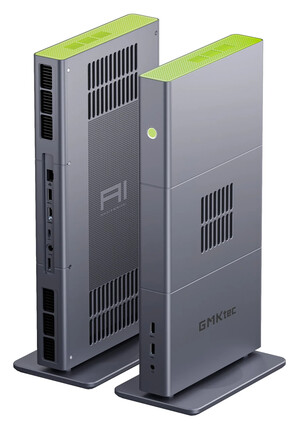
The GMKtec EVO-X3 is built around the AMD Ryzen AI Max+ PRO 495 — the highest-memory configuration of AMD's unified CPU/GPU/NPU platform — paired with 192 GB of shared memory in a compact vertical-tower chassis. For SMBs, it means substantial open-weight AI models run entirely on-site, at a fixed hardware cost, instead of through costly cloud APIs.
Hardware Specifications
At its core sits the AMD Ryzen AI Max+ PRO 495: 16 Zen 5 CPU cores (32 threads) alongside an integrated AMD Radeon 8060S GPU (RDNA 3.5, 40 compute units) and an XDNA 2 NPU rated at up to 50 TOPS. All three engines draw from a single 192 GB LPDDR5x unified memory pool, and storage is handled by dual PCIe 4.0 NVMe SSD slots (4 TB included, expandable). A triple-fan, triple-heat-pipe vertical-tower design keeps the system cool under sustained multi-hour inference, while a rear OCuLink Gen4 ×4 port allows an external GPU enclosure to be added later, without replacing the base system.
192 GB Unified Memory: The Largest Capacity in the Ryzen AI Max+ Platform
The Ryzen AI Max+ platform scales its shared memory pool and because CPU, GPU, and NPU address that same pool, up to 160 GB can be assigned to the GPU for AI inference, while the remainder stays reserved for the operating system and background applications. That headroom is enough to host quantized open models in the 300B+ parameter class.
For day-to-day interactive use — support chatbots, document review, coding assistance — mid-sized models run at conversational speed, while the full 160 GB allocation can be dedicated to a single large-class model for heavier reasoning tasks, run in batch or overnight rather than turn-by-turn, without a query ever leaving the building.
Built for Sustained Local Inference
A vertical-tower chassis with three dedicated fans and three heat pipes gives the EVO-X3 more thermal mass and airflow than a typical flat mini-PC form factor. Three selectable power profiles (Silent, Balanced, Performance) let the same hardware suit a quiet shared office or a maximum-throughput dedicated inference box.
Software & Security
The EVO-X3 ships ready for Windows 11 Pro or a Linux-based inference stack, with TPM 2.0 included as standard, keeping locally processed business data on-premises by default.
Summary
For SMBs evaluating the AMD Ryzen AI Max+ 495 category for local AI hosting, the GMKtec EVO-X3 offers the largest unified memory pool available on the platform, paired with a thermal design and OCuLink expansion path built for business-grade inference.